
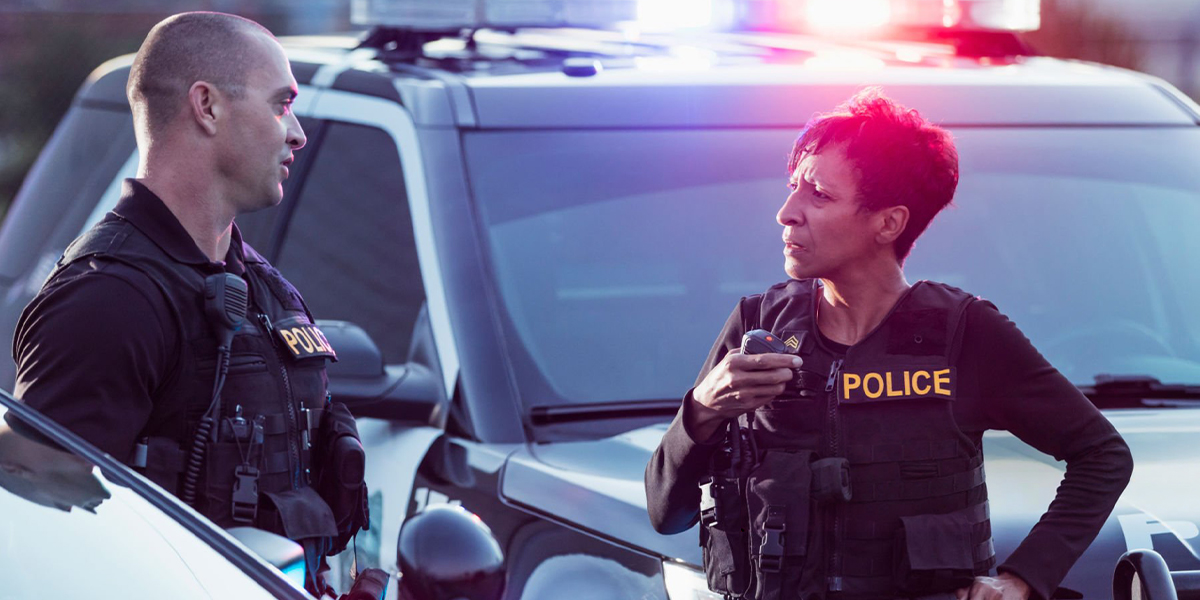
A serious crime is in progress, and officers are already on their way. The most important question facing them, “What are we walking into?”, has no clear answer until they arrive. In the minutes between the first alert and reaching the scene, the amount and quality of information available shape the entire response. That window, before anyone reaches the location, is where preparedness is either built or left to chance.
Two officers can be sent to the same address for the same kind of call and arrive in two very different states of readiness.
In the first case, an officer is dispatched to a commercial alarm with little more than a location and a call category. What triggered the alarm, whether anyone is on site, and what waits behind the door remain unknown until the officer arrives and sees it firsthand. Every decision, from approach route to whether to hold for backup, gets made with incomplete information.
In the second case, that same officer arrives with far more to work with. Before the responding officer turns onto the street, police dispatch relays verified video, a GPS-confirmed location, suspect descriptions, and other dispatch-ready intelligence to the responding officer. The same officer, responding to the same call, now knows what the scene looks like, where activity is occurring, and what to plan for on the approach.
The difference between these two responses is not how the officers do their jobs. Both are trained, capable, and ready to act. The difference is what they know before they arrive. Dispatch-ready intelligence, verified by a security team and shared through local police dispatch, helps officers prepare before they arrive.
Key Takeaways:
- Dispatch-ready intelligence, verified by a security team and relayed through local police dispatch, gives responding officers context like video, images, location, floor plans, and suspect descriptions before they reach the scene. It supports preparedness and safety for responding officers rather than changing how officers respond.
- Basic dispatch data tells officers where an incident is. Verified, dispatch-ready intelligence adds who and what, strengthening situational and tactical awareness before arrival.
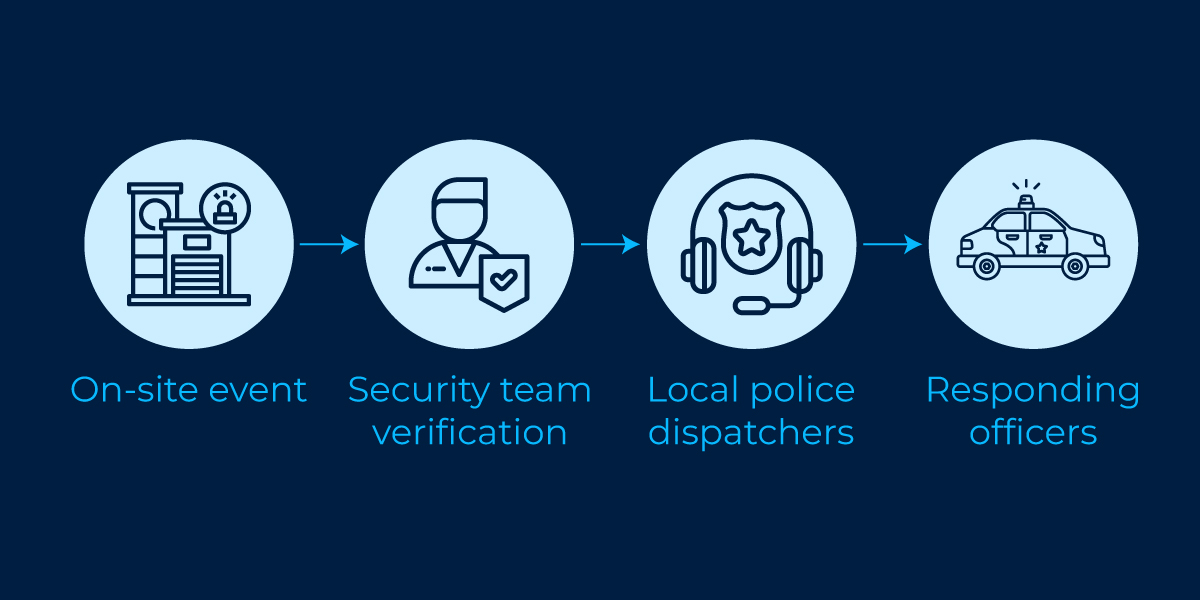
- This intelligence moves along a defined path: an on-site trigger, verification by a security team, and then delivery to local police dispatchers, who share it with responding officers.
- A trusted police dispatch pathway carries this verified intelligence into existing police dispatch workflows while preserving dispatcher authority. It works alongside 911 and does not replace dispatcher decision-making.
Why Pre-Arrival Intelligence Matters for Officer Preparedness
Before officers arrive, the decisions they make depend on the information available at dispatch. Verified, dispatch-ready intelligence adds context that supports preparation throughout the response:
- Approach and staging: understanding the layout and where activity is occurring helps officers choose a considered approach and staging point.
- Backup and resource decisions: verified context helps officers and supervisors decide what and who to send before anyone arrives.
- Communication and coordination: a shared, verified picture keeps responding units and dispatch working from the same information.
- Tactical and situational awareness: seeing conditions in advance supports deliberate, informed decisions rather than reactions formed only on arrival.
Officer safety remains a pressing concern for every agency. According to the FBI’s Law Enforcement Officers Killed and Assaulted (LEOKA) data, reported assaults on officers reached a ten-year high in 2024, with 85,730 officers assaulted in the line of duty, a rate of 13.5 assaults per 100 officers. The FBI maintains this data collection to study these circumstances, shape training and policing strategies, and ultimately help save officers’ lives. Providing officers with verified information before arrival supports the broader goal of improving preparedness during high-risk incidents.
None of this changes how capable officers are. It changes how prepared they can be. Learn more about how technology supports law enforcement.
What Information Helps Responding Officers Before They Arrive?
Not all information shared during dispatch provides the same operational value. A call category and an address cover a narrow set of questions. Verified, dispatch-ready intelligence goes further, and it does so with confirmation rather than assumption.
The table below compares the basic information typically available to police dispatch with verified, dispatch-ready intelligence, showing how additional context supports preparedness before arrival.
| Event Details | Basic Dispatch Information | Verified, Dispatch-Ready Intelligence |
|---|---|---|
| Location | A general address or area, relayed verbally | GPS-confirmed location intelligence, updated as the situation develops |
| Incident Classification | Based on an alarm type or a caller’s account | Confirmed from the source by verified video, so dispatch can gauge the event accurately |
| Scene View | A verbal description only, often secondhand and could be incomplete | Real-time video and images showing actual conditions, like weapons and the number of suspects, verified visual intelligence from the source |
| Suspect and Vehicle Descriptions | Vague or unavailable until officers arrive | Suspect and vehicle descriptions from captured images or video |
| Verification | Unconfirmed until an officer sees it firsthand | Verified by a security team before it reaches dispatch |
| Effect on Preparedness | Officers assess conditions on arrival | Officers plan their approach and coordination before arrival |
The value is not simply more data. It is verified data, delivered at the right time to inform decisions rather than confirm them after the fact.
How Technology Supports Officer Safety
Different types of verified information provide responding officers with valuable context before arrival. Together, they support officer safety by improving situational awareness and helping officers prepare for the conditions they may encounter.
- Verified location and incident verification: A GPS-confirmed location helps ensure responding officers are directed to the correct place. Verification by a security team gives dispatchers greater confidence that the information supports an incident requiring law enforcement response, providing officers with more reliable context before arrival.
- Verified video: Provides officers with visual context that cannot be conveyed through a verbal description alone. It helps officers assess scene conditions, understand how an incident is unfolding, and prepare their approach before reaching the location.
- Observed weapon indicators, when available: When visible through verified video, observed weapon indicators provide additional context about the conditions officers may encounter. Combined with other verified incident information, they support officer preparedness and situational awareness before arrival.
- Suspect and vehicle descriptions: Help officers identify involved individuals or vehicles, distinguish them from bystanders, and coordinate more effectively with other responding units.
- Direction of travel: When a suspect or vehicle leaves the original location, updated direction-of-travel information helps dispatchers and responding officers coordinate as the incident evolves, supporting a more informed response.
Taken together, these elements support situational awareness and informed decision-making. None guarantees an outcome. The value is preparedness, delivered early enough to give officers more to work with before they ever step out of the vehicle. This reflects a broader direction in policing and community safety.
Research from the National Institute of Justice (NIJ) describes how bringing together data from multiple sources to give officers actionable intelligence and stronger situational awareness has become central to how agencies support their officers in the field.
The Dispatcher’s Role in Officer Preparedness
Dispatchers sit at the center of officer preparedness. They evaluate incoming information, determine what is relevant, and relay it to responding officers in a form they can act on. Verified, dispatch-ready intelligence strengthens that role by giving dispatchers confirmed context to work from rather than an unverified alarm.
It is worth being clear about what this does and does not do. DirectToDispatch™ supports existing dispatch workflows. It does not replace 911, RTCCs, or dispatcher decision-making. Dispatchers remain the decision-makers. The pathway simply gives them dispatch-ready intelligence, drawn from the source, to inform the choices they are already trained to make. For a closer look at how this fits into everyday operations, read Real-time crime reporting tools and what businesses should know.
From Detection to Dispatch: How Verified Intelligence Reaches Responding Officers
Verified intelligence does not reach officers by accident. It follows a deliberate path from an on-site event to the officers responding to it, and each step exists to protect both accuracy and the people involved. While traditional methods provide essential voice communication, they were not built to carry verified video and live location into police dispatch workflows. That is the role a trusted police dispatch pathway is designed to fulfill.
3Si’s DirectToDispatch™ (DTD™) is the secure, trusted priority pathway designed for local police dispatch and has been used for more than 21 years. Utilizing a private-sector interface called the DTD Gateway, verified security intelligence is sent directly to local police dispatch for verified threats to property and life crimes in real-time.
Here is how that verified information moves, step by step:
The Detection-to-Dispatch Pathway
- On-site event: An unauthorized event or an alert from a protected asset is detected.
- Security team verification: The organization’s internal security team receives the alert and verifies the event.
- Delivery to local police dispatchers: The security team sends the verified video and event data through the DTD Gateway to local police dispatchers.
- Prepared response: Local police dispatchers review the verified information and share dispatch-ready intelligence with responding officers.
A few points are worth emphasizing. Employees never send data directly to law enforcement. The security team is always the verified intermediary. DTD also works alongside existing police intelligence systems and dispatch workflows rather than replacing them, and it preserves dispatcher authority at every step. You can read more on the DirectToDispatch™ page.
How Better Information Supports Better Public Safety Outcomes
Better information before arrival does not promise a particular result. What it does is raise the quality of the decisions made along the way. When responding officers understand a scene in advance, coordination improves, communication tightens, situational awareness grows, and safety is prioritized. Those are the conditions under which more informed decisions can be made.
This is why verified information reaching officers before arrival has become part of how agencies think about responding officer preparedness, and why solutions like DirectToDispatch™ for law enforcement focus on delivering that context into the workflows officers already rely on. The goal is not speed. It is clarity, coordination, and informed judgment.
Conclusion
Responding officers make critical decisions before they reach the scene. The quality of those decisions depends on the quality of the information available during dispatch. Basic dispatch information answers the question of “where”. Dispatch-ready intelligence adds “what” and “who”, giving responding officers verified context before they arrive. Verified video, confirmed location, and suspect descriptions help transform an unknown scene into one officers can prepare for with greater situational awareness.
DirectToDispatch™ is a trusted police dispatch pathway to deliver verified, dispatch-ready intelligence into local police dispatch workflows while preserving dispatcher authority and working alongside existing systems. It is officer safety technology built around a simple idea: the more responding officers know before they arrive, the better prepared they are for whatever they find.
Book a demo to see how it works.
FAQ
What is pre-dispatch intelligence?
Pre-dispatch intelligence is verified, dispatch-ready information about an incident that reaches police dispatch and can be shared with responding officers before they arrive at the scene. It typically includes verified video, a confirmed location, and suspect descriptions that add context to a basic alarm or call.
What information helps responding officers before arrival?
The most useful information includes verified video, a GPS-confirmed location, suspect descriptions, and direction of travel. Together, these details give responding officers situational and tactical awareness so they can plan their approach and coordinate before reaching the scene.
What is dispatch-ready intelligence?
Dispatch-ready intelligence is verified incident information packaged in a form police dispatchers can act on and relay to officers. It differs from a raw alarm because a security team has already confirmed the event and attached supporting context such as video and location.
How does verified video support officer preparedness?
Verified video shows responding officers what is actually happening at a location before they arrive. That visual intelligence supports tactical awareness, informs approach and backup decisions, and helps officers arrive prepared rather than assessing an unknown scene on the spot.
How does DirectToDispatch™ work with police dispatch?
DirectToDispatch™ delivers verified, dispatch-ready intelligence into existing police dispatch workflows while preserving dispatcher authority. An on-site event is verified by a security team, which then sends the verified video and event data to local police dispatchers. It works alongside 911 and does not replace dispatcher decision-making.


 Jason Lockett
 Ben Tucker
 Charlie Erickson
 Joseph Courtesis
 Keith Deaton