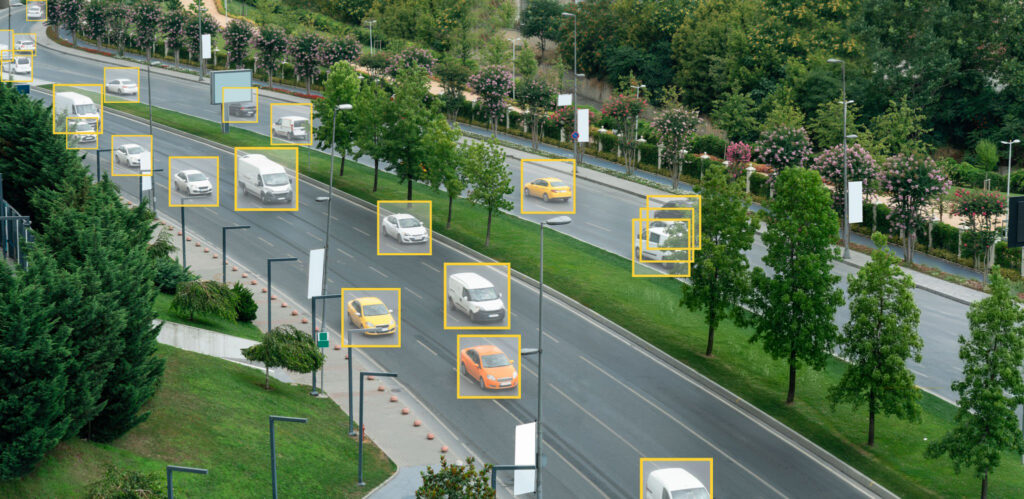

Retailers are capturing significant amounts of incident information through cameras and other security systems. They are not, by their own admission, reporting most of them to law enforcement.
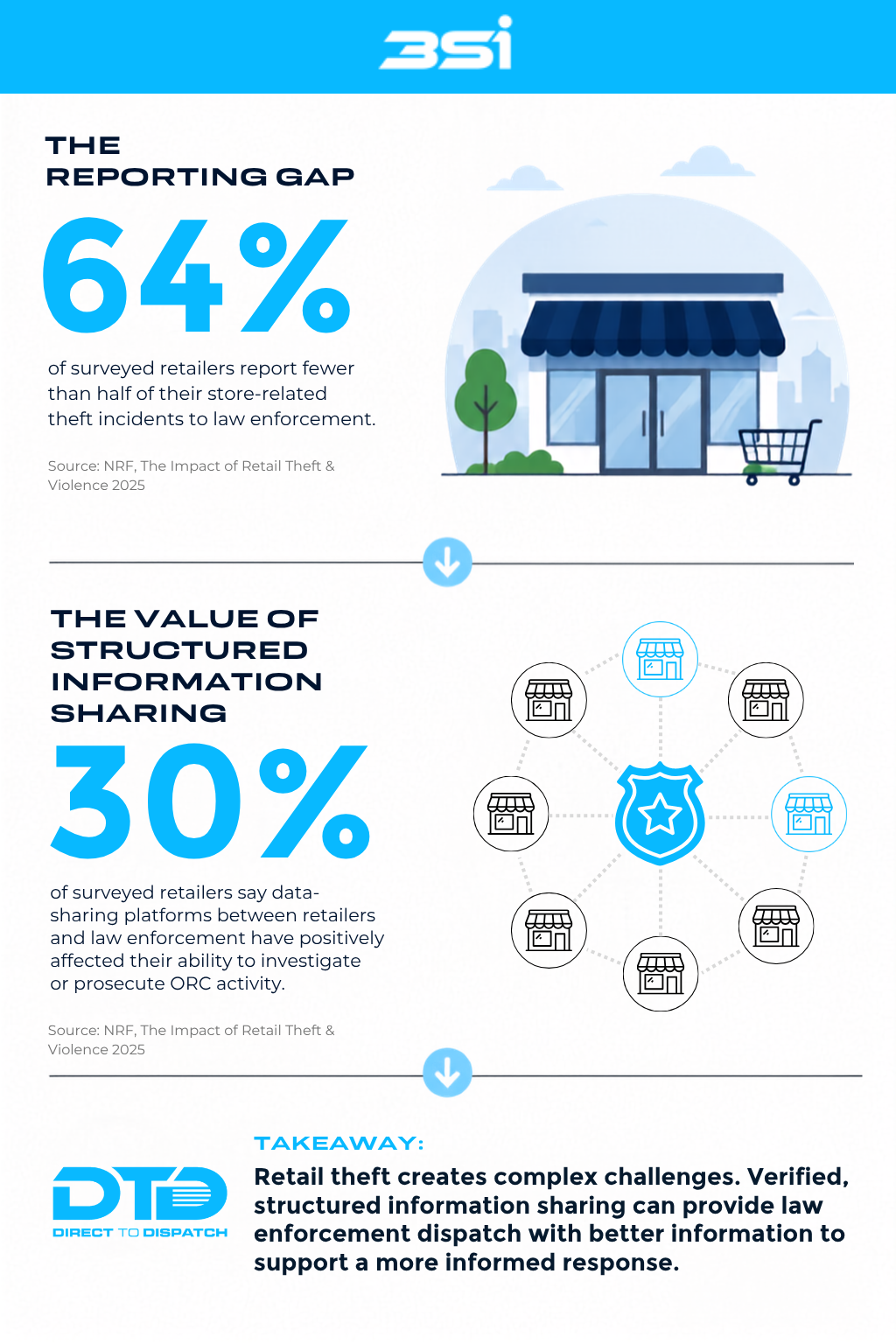
According to the National Retail Federation’s 2025 Impact of Retail Theft and Violence report, 64% of retailers said they report less than half of their store-related theft incidents to police. The same report also found that 30% of surveyed retailers said data-sharing platforms between retailers and law enforcement positively affected their ability to investigate or prosecute organized retail crime. Together, these findings highlight the value of trusted, structured information sharing between retailers and law enforcement.
That statistic should concern every security leader. Not because it reflects a failure of effort on anyone’s part, but because it highlights an opportunity to strengthen how security information is verified, prepared, and shared. Many organizations already have valuable video, location data, and other incident information. The challenge is turning relevant information into verified, dispatch-ready intelligence and ensuring it can reach police dispatch through a trusted pathway while an incident is still unfolding. That is an operational challenge, not simply a technology challenge.
Key Takeaways
- The NRF’s 2025 report found that 64% of retailers report less than half of their retail theft incidents to law enforcement, and that 30% of retailers say data-sharing platforms positively affected their ability to investigate or prosecute organized retail crime. Together, these findings point to an opportunity to strengthen how retailers and law enforcement share relevant information
- The challenge is not simply having more security data. It is ensuring relevant information can be verified, curated, and delivered to police dispatch in a dispatch-ready format that supports informed incident response.
- DirectToDispatch™ provides a verified police dispatch pathway for delivering dispatch-ready intelligence directly to local police dispatch during verified incidents requiring law enforcement response.
The Real Story Behind Retail Theft Underreporting
The underreporting numbers do not tell the whole story. Retailers also see value in sharing information with law enforcement. In fact, 30% of surveyed retailers said data-sharing platforms positively affected their ability to investigate or prosecute organized retail crime.
Together, these findings point to a broader operational challenge: retailers may have valuable incident information, but that information does not always reach police dispatch in a usable format while an incident is still unfolding. The opportunity is to turn relevant security information into verified, dispatch-ready intelligence that can support situational awareness during the active response.
A typical in-progress incident still often starts the same way it did a decade ago: a call to 911, a verbal description, and a structured handoff through standard dispatch channels. Meanwhile, the organization’s own retail security operation may already have video, a license plate, real-time location data, and other information that can help verify what is occurring. That intelligence exists inside security operations. The challenge is verifying the relevant information and getting dispatch-ready intelligence to police dispatch while the incident is still unfolding, where it can support situational awareness and informed decision-making.
The same NRF research found that 67% of retailers have seen involvement from transnational organized retail crime (ORC) groups, operations that move quickly across jurisdictions and can create additional challenges for security teams and law enforcement. As incidents become more coordinated, consistent intelligence sharing becomes increasingly important.
Why More Cameras Aren’t the Fix for Security Gaps
Retail organizations have made significant investments in detection. Cameras and monitoring systems can provide valuable visibility into incidents as they unfold. But detection and verification alone do not close the intelligence gap. A critical challenge is how verified intelligence reaches dispatch.
A security team that can see a theft crew in real time has not closed the intelligence-sharing loop until that verified intelligence reaches police dispatch, where dispatchers can use it to support informed decisions. Without a trusted pathway, valuable context may arrive late, arrive in pieces, or not reach dispatch during the active incident, limiting the additional operational visibility available to responding officers.
A retailer might report an incident while valuable intelligence remains outside the active response. Police dispatch may receive a verbal description while relevant video sits on a server just two miles away, within the retailer’s private systems.
What Closing the Intelligence Gap Actually Looks Like
Closing the intelligence gap does not require retailers to replace their existing systems. It requires a pathway built for what they already have. DirectToDispatch™ works with existing video, GPS, and security monitoring systems already in place and provides a trusted pathway for sharing verified intelligence with police dispatch as events unfold.
When security teams verify an incident requiring law enforcement response, DTD™ delivers that verified intelligence to police dispatch in a format that supports informed incident response. This happens while the event is still in progress. Dispatchers can then share that intelligence directly to responding officers’ mobile devices, providing additional verified context before arrival.
The goal is stronger situational awareness for everyone in the response chain. Through a trusted public-private collaboration framework, responding officers can receive additional verified context before arrival, while law enforcement retains authority over response.
| Stage | Without a Verified Pathway | With DirectToDispatch™ |
|---|---|---|
| What dispatch receives | A verbal description relayed over the phone | Verified video, images, and location data, delivered together |
| Intelligence during an active incident | Relevant security information may remain within private systems | Verified, dispatch-ready intelligence shared while the incident is active |
| Context for responding officers | Additional context may be limited before arrival | Dispatch-ready intelligence before arrival |
| Where security intelligence remains | May remain within private systems or be used after the incident | Shared with police dispatch to support the active response |
| Impact on existing systems | Existing security systems remain in place | Works with existing video, GPS, and security monitoring systems already in place |
Why Verified Intelligence Matters During an Active Incident
The retail industry generates significant security intelligence. The challenge is ensuring relevant information can be verified and that dispatch-ready intelligence has a trusted, structured pathway to police dispatch during incidents requiring law enforcement response.
Closing that gap is not about asking retailers or law enforcement to do more with less. It is about giving verified intelligence a trusted, structured pathway to reach police dispatch in a dispatch-ready format. As the NRF’s 2025 report highlights, retailers who leverage data-sharing platforms report a positive impact on their ability to investigate and prosecute organized retail crime.
DirectToDispatch™ exists to provide that pathway, enabling verified intelligence from existing security systems to reach police dispatch in a dispatch-ready format that supports more informed incident response. It works with existing security systems and fits alongside established workflows, while control over what is shared remains with the organization.
When private security operations and public safety agencies share verified intelligence through trusted public-private collaboration, dispatch and responding officers gain additional situational awareness to support informed decision-making.
To see how a verified dispatch pathway fits alongside your existing security investment, explore DirectToDispatch™ for Security Teams
FAQ
Why does retail theft so often go unreported to police?
Retail theft may go unreported for a variety of operational and organizational reasons. Separately, many retail security teams have video, location data, and other incident details that may not reach police dispatch in a usable format during an active incident. A trusted pathway for sharing dispatch-ready intelligence can help relevant, verified information reach police dispatch when an incident requires law enforcement response.
How is organized retail crime (ORC) different from individual shoplifting?
Organized retail crime involves coordinated groups stealing merchandise at scale for resale, often across multiple locations or jurisdictions. The involvement of organized groups operating across jurisdictions can make traditional reporting methods difficult to scale. Retail security teams benefit from trusted pathways that help deliver verified, dispatch-ready intelligence during active incidents.
Does better crime detection automatically improve incident response?
Not on its own. Detecting an incident and delivering verified intelligence to dispatch are two separate steps. Security cameras and security monitoring can confirm a crime in progress, but that verified intelligence only supports incident response when it reaches police dispatch in a dispatch-ready format that can inform law enforcement decision-making.
Does DirectToDispatch™ replace 911 or existing dispatch systems?
No. DirectToDispatch™ works alongside standard 911 and dispatch infrastructure. It does not replace them. It provides a verified police dispatch pathway for delivering dispatch-ready intelligence, including video, location, and incident details, to support decisions dispatchers and officers make within their established workflows.


 Charlie Erickson
 Joseph Courtesis
 Jason Lockett