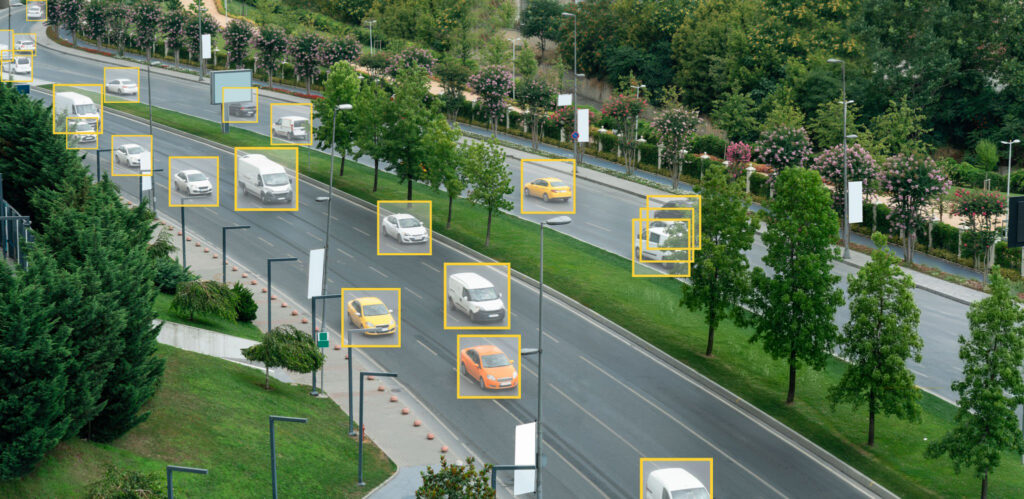

Security incidents are climbing. Retailers alone reported a combined 17% increase in shoplifting and merchandise theft incidents in 2024, according to the National Retail Federation and the Loss Prevention Research Council.
As incidents become more frequent, how an organization responds is just as important as its ability to detect an event.
Most security programs are good at spotting that something is wrong: an alarm sounds, a sensor fires, a camera flags motion. The harder question is what happens next.
A strong security workflow process turns that first signal into a verified, coordinated response; a weak one leaves the team guessing about what triggered it. As threats grow more organized, the gap between detection and response is where real risk lives, and improving the incident workflow process is how organizations close it.
Key Takeaways
- A security workflow process provides a structured path from detection through verification, escalation, and response, helping organizations respond more consistently to security incidents.
- Detection alone is not protection. An operational workflow proves its worth in how reliably a verified event reaches the people who can act.
- Many incident management challenges occur during handoffs, where delays, communication gaps, and manual processes can slow the response.
- Connecting enterprise security operations to public safety partners through verified intelligence, not voice alone, strengthens asset recovery and community outcomes.
What Is a Security Workflow Process?
A security workflow process is the defined sequence of steps an organization follows when a security event occurs, from detection to resolution. Think of it as the operating logic behind your security measures: the structured processes that decide who sees an event, how it is confirmed, who is notified, and what action follows. Without that logic, even excellent hardware produces noise instead of answers. General overviews of the incident management process describe it the same way: a structured practice for turning a detected issue into a coordinated resolution.
A useful way to understand workflow in security systems is to separate the tools from the coordination. Cameras, trackers, and sensors generate data. The workflow gives that data meaning and direction by defining how verified information moves from detection to response.
For example, imagine a break-in at a retail store after closing. A camera flags movement inside the closed store, a security team member or professional monitoring center confirms it is a real intrusion rather than a false trigger, and the team routes the verified video and location to local police dispatchers. Officers arrive with a clear picture of what they are walking into. Each step builds on the last, turning a single alert into a coordinated response.
Good workflows are documented, repeatable, and regularly reviewed, so a night-shift responder handles an incident the same way a daytime team would. Mature security operations treat workflow as a living asset. They map each event type to a response, assign clear ownership, and remove steps that add friction without adding safety. They also connect internal tools so verification does not require manually stitching sources together mid-incident. 3Si builds its security solutions around this idea, and it sits at the heart of what a modern crime intelligence platform is designed to deliver: not more alerts, but a cleaner path from event to action.
Key Stages in the Incident Workflow Process
Every effective incident workflow process moves through the same core stages. Naming them helps security teams find the weak links and standardize their approach across sites. That detect, verify, escalate, and respond logic mirrors formal frameworks, including a documented incident management process used by large institutions.
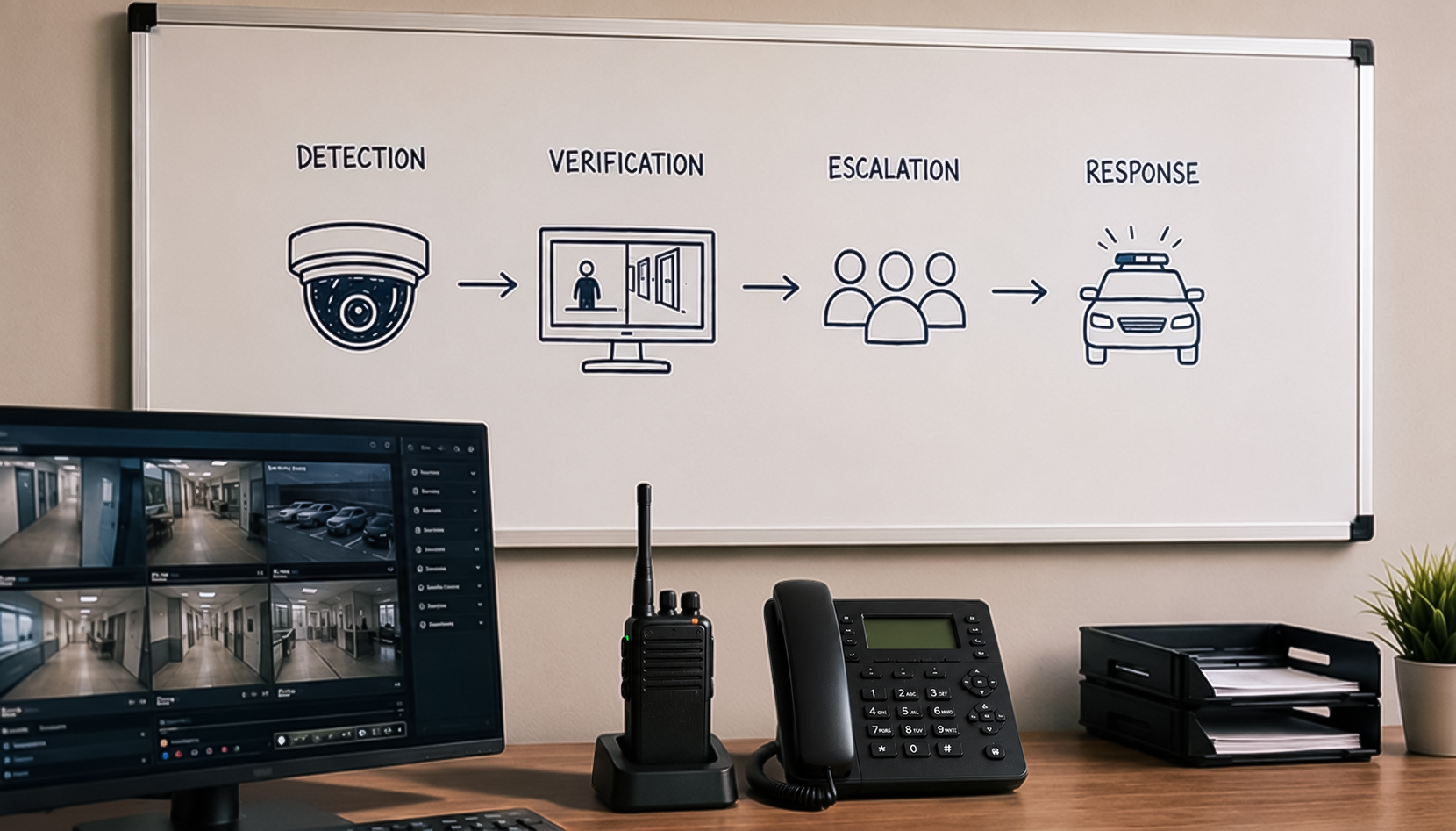
The incident management process generally follows four stages:
- Detection. A camera, tracker, sensor, or person identifies that a potential event is underway. In the after-hours break-in, a camera flags movement inside the closed store. This is the trigger, not the conclusion.
- Verification. The internal security team or professional monitoring center confirms whether it is a genuine threat. A team member pulls up the live view and sees a person inside rather than a false trigger, filtering out noise and protecting the credibility of everything downstream.
- Escalation. The security team packages the relevant context and routes it to the right responders. For the break-in, that means the verified clip, the store address, and where the intruder is inside the building.
- Response. Responders act on verified information. Local police dispatchers send officers who already know what they are walking into, and the team documents the outcome for review and continuous improvement.
The order matters. An employee triggers the alert, the internal security team or professional monitoring center verifies it, and only then does the security team share verified video and event information with police dispatch. Employees never send data directly to responders, which keeps staff safe and the intelligence trustworthy.
Once an incident has been verified, organizations need a trusted way to share that intelligence with police dispatch. DirectToDispatch™ (DTD™) is a secure, verified police dispatch pathway that supports this process by delivering verified alert information, including visual evidence and location intelligence, alongside traditional voice communications. Dispatchers can then share this actionable intelligence with responding officers through their established workflows.
See the Complete Incident Management Process at a Glance
The Role of Security Operations in Workflow Efficiency
A security operations process is only as strong as the coordination behind it. Whether the work sits with a monitoring team, a loss prevention group, or a corporate security desk, the operational workflow determines how quickly a verified event becomes an informed decision.
Efficient operations depend on three habits: continuous monitoring so events are caught early, clear coordination so no step is dropped between people, and confident decision-making so verified events move without hesitation.
The reverse is also true. When monitoring is fragmented across disconnected tools, operators spend time reconciling sources instead of acting. Strong security operations reduce that burden with a single, reliable view and a defined next step for each type of event.
That discipline scales across a corporate security footprint and supports the accountability standards common across the public sector. Efficient operational workflow security is less about adding staff and more about removing ambiguity, so the right person acts on the right information at the right time.
Common Gaps in Security Procedures and Workflows
Most security procedures do not fail at the point of detection. They fail in the spaces between steps, where a verified concern loses momentum. Understanding these gaps is the first step toward meaningful security process improvement. The most common weak points include:
- Inefficiencies. Manual, repetitive handoffs force skilled staff to spend time on routine relays instead of judgment, which slows the response.
- Delays. Every additional intermediary between a verified event and police dispatch adds time, and time is exactly what an in-progress incident does not allow.
- Communication gaps. When information passes through several relay points, detail is lost or distorted, and a responder who arrives with a vague description is working blind.
- Risk exposure. Poorly governed data sharing can widen an organization’s attack surface, trading one security problem for another.
These gaps carry a real cost. When police dispatchers must sort real events from noise, details can be lost in the handoff, and procedures built on manual relays and unverified signals become the bottleneck. Every extra step between a verified event and the responder widens the window in which an incident can unfold. Closing these gaps is what a verified pathway like DirectToDispatch™ is built to address.
How Technology Improves Security Workflow Processes
Technology drives security process improvement by reducing manual effort and helping organizations share dispatch-ready intelligence through established workflows. The goal is not more dashboards. It is a cleaner workflow in security systems, where verified information moves on its own instead of waiting for someone to relay it. Three capabilities matter most: automation of routine handoffs, real-time data that reflects what is happening now, and analytics that help teams verify and prioritize events.
In practice, routine handoffs run automatically, everyone works from the same verified information, and analytics make verification more consistent and less prone to error.
The table below compares a technology-enabled workflow with a traditional manual one.
| Workflow Stage | Traditional Manual Approach | Technology-Enabled Approach |
|---|---|---|
| Detection | Isolated alarms and disconnected tools | Continuous monitoring across the unified view |
| Verification | Relies on verbal descriptions in high-stress moments | Verified video and location confirm the event |
| Escalation | Passes through multiple relay points | Verified intelligence routed directly to law enforcement dispatch for distribution to responding officers |
| Response | Responders arrive with limited context | Responders receive dispatch-ready intelligence for a more informed response |
3Si’s security solutions are built to help security teams package and share verified, dispatch-ready intelligence through established public safety workflows.
DirectToDispatch™ extends that capability by turning what cameras and sensors capture into verified, actionable intelligence and delivering it to police dispatch, where dispatchers can share it safely with responding officers.
Connecting Security Workflows to Law Enforcement and Public Safety
The strongest incident management process does not stop at the enterprise edge. It connects verified events to public safety partners in a way that protects the business and supports law enforcement, and this is where a security workflow process shows its clearest value. While traditional methods provide essential voice communication, spoken information often lacks the context an officer needs.
A standardized, coordinated approach is well recognized in public safety, where FEMA’s National Incident Management System exists to align response across agencies, and enterprise security workflows benefit from the same structured approach. By sharing verified visual and location information with local police dispatchers alongside traditional voice communications, a professional monitoring center provides responders with a clearer understanding of the situation before they arrive.
Two real-world examples illustrate this approach. In one case, a metropolitan police department faced a string of unpredictable robberies. Detectives protected key assets with GPS Trackers, and when a tracker activated, its location was displayed through DirectToDispatch™, providing police dispatch with real-time location intelligence that helped officers locate and apprehend the suspect. In another case, a local police department ran a bait-bike program protected with a GPS Tracker and supported by the DTD™ Gateway, providing officers with a documented trail from the scene to the apprehension.
The common thread is disciplined data sharing. These examples show that the value isn’t just in collecting data, but in securely sharing verified intelligence with the right people at the right time. 3Si’s outbound-only architecture means verified intelligence reaches local police dispatchers without opening the enterprise’s internal network. Organizations maintain full control of their data while supporting public safety through verified, dispatch-ready intelligence. Learn more about how the DirectToDispatch™ pathway supports the public sector.
Signs Your Security Workflow Process Needs Improvement
As security programs grow, workflows that once worked well can become harder to manage. If several of these sound familiar, it may be time to review your security workflow process:
- Alerts arrive faster than your team can verify them, causing real incidents to compete with false alarms.
- Verifying an incident requires checking multiple disconnected systems or calling around for context.
- Incident details are relayed through multiple manual steps before reaching police dispatch.
- Responding officers arrive with little more than an address and a vague description.
- No one clearly owns the handoff to police dispatch, so the process varies from one incident to the next.
If these describe your operation, the challenge may not be detection. It may be the workflow that turns detection into an effective response.
Conclusion
Improving your security workflow process is one of the most valuable investments a security program can make because it strengthens every event you already detect. The organizations that see the best outcomes are not simply buying more sensors. They refine the operational workflow security that connects detection to a verified, prioritized response, and they review that workflow regularly so it keeps pace with evolving threats.
Real security process improvement follows a simple pattern: detect reliably, verify carefully, escalate cleanly, and respond with context. When security operations are built around that flow, teams spend less time reconciling alerts and more time acting on verified intelligence. The payoff shows up in stronger asset recovery and better support for the public safety partners who respond to verified incidents.
DirectToDispatch™ supports this approach by providing a secure, verified police dispatch pathway for sharing dispatch-ready intelligence with local police dispatchers. To see how it works in practice, explore how DirectToDispatch™ works for security teams or book a demo to discuss your organization’s security workflow.
FAQ
What is the difference between an incident management process and a security workflow process?
An incident management process covers how a single event is handled once it occurs. A security workflow process is the broader framework governing detection, verification, escalation, and response across all events, giving security teams a consistent incident workflow process for every event.
Why do security procedures fail even when detection works?
Most security procedures break down at the handoffs, not the detection point. Delays, communication gaps, and inconsistent verification all slow the response. Clear ownership and routing verified information to police dispatch, where it can be shared with responding officers through established workflows, reduces those failure points.
How does technology improve incident workflows?
It automates routine handoffs, provides real-time data, and helps teams verify events, creating a workflow in security systems where actionable intelligence reaches police dispatch for distribution to responding officers without a manual relay slowing it down.
How do enterprise workflows connect to law enforcement?
Through verified, event-specific data sharing rather than open network access. A verified pathway like DirectToDispatch™ sends confirmed intelligence to local police dispatchers while the enterprise keeps control of its systems, with connected video and location data supporting verification.



 Joseph Courtesis
 Jason Lockett
 Ben Tucker